Destinations
Japanese Etiquette for Tourists: Respectful Travel Essentials
By Teresa Cho
November 19, 2026
Field Notes

Think a smile and a camera are all you need in Japan?
Small missteps can annoy people or get you asked to leave sacred sites, so learning a few basic habits pays off.
This guide lists 12 practical etiquette rules, like shoe removal, quiet transit behavior, chopstick don’ts, onsen and tattoo policies, each labeled Minor, Moderate, or Severe so you know what matters most.
It also gives quick fixes, like a brief ‘Sumimasen’ and prompt correction, so you can travel respectfully and avoid awkward stops.
What Are the Essential Etiquette Rules Tourists Should Follow in Japan?
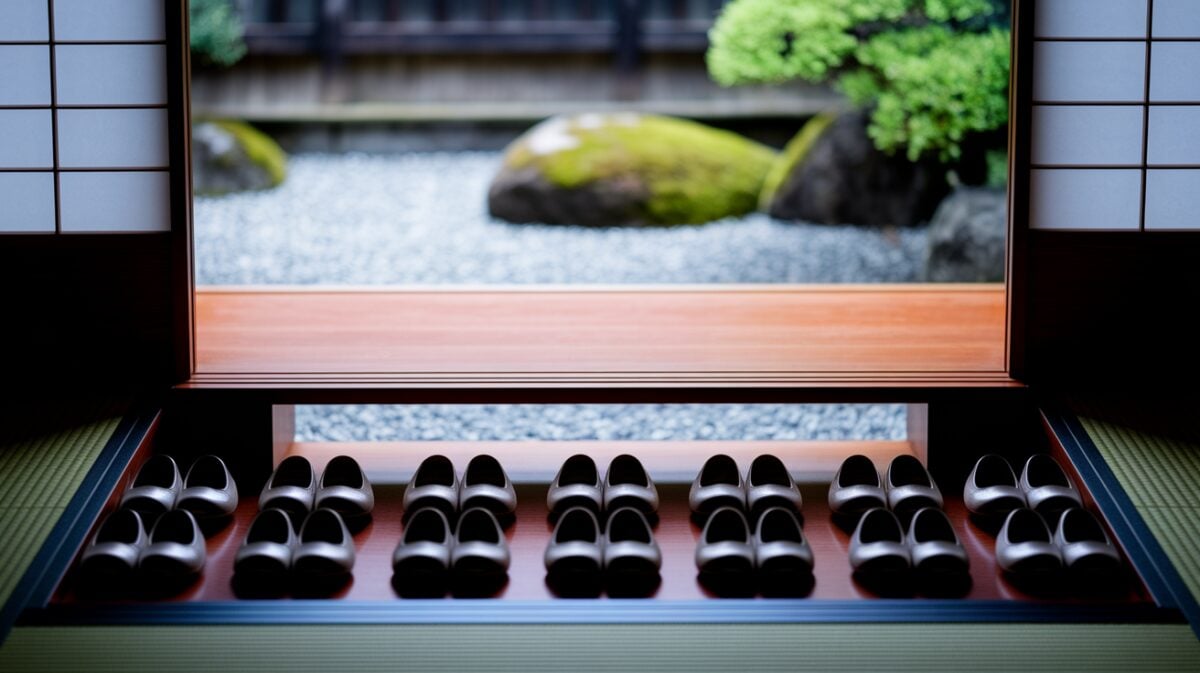
Nobody expects you to land in Japan already knowing every rule. What locals actually notice is attentiveness, watching what others do, keeping noise down, and following whatever sign or instruction is posted. Get that mindset right and most of the specific customs take care of themselves.
Still, it helps to run through a quick checklist before you leave your hotel each morning. Here are 12 rules that cover the situations tourists run into most, each tagged with how serious a slip up tends to be.
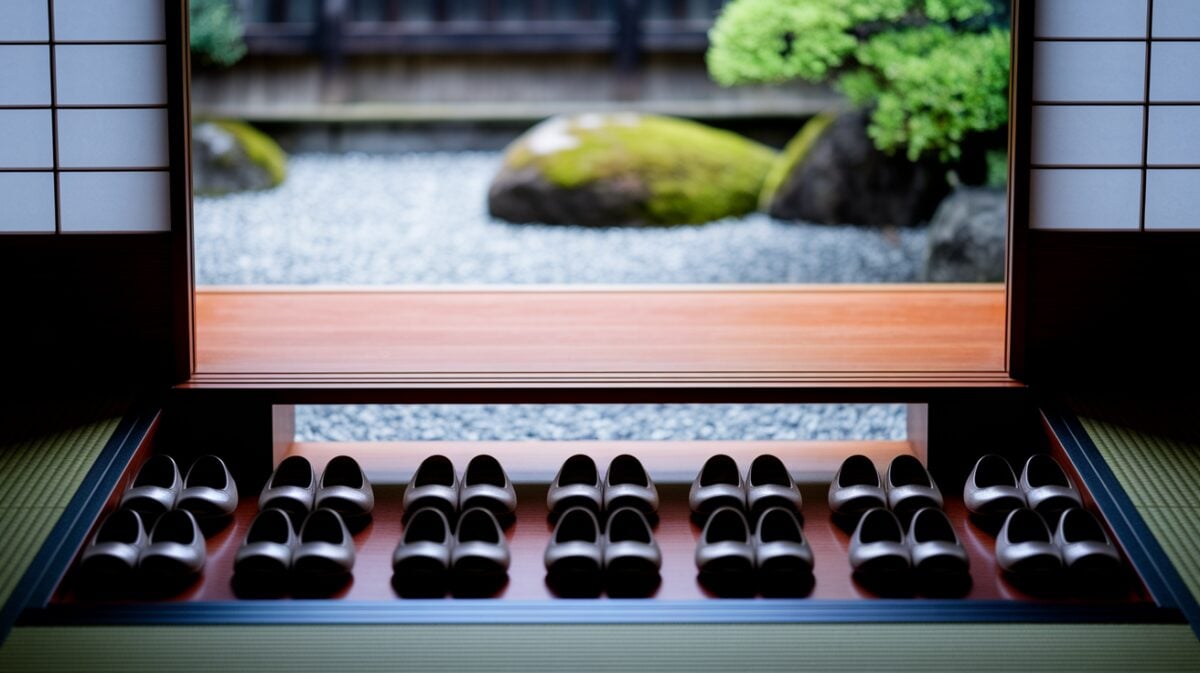
- Remove shoes where required, such as homes, ryokan, and some temples, Moderate
- Keep your phone silent and skip calls on local trains, Minor
- Queue in an orderly single line at platforms, counters, and elevators, Minor
- Skip the tip at restaurants and taxis, Minor
- Never stick chopsticks upright in rice or pass food chopstick to chopstick, Severe
- Use a slight bow or nod as a greeting, especially with staff and elders, Minor
- Keep a comfortable amount of personal space in lines and on transit, Minor
- Follow posted photography restrictions at sacred sites and ceremonies, Severe
- Wash and rinse completely before stepping into an onsen tub, Moderate
- Check and respect a bathhouse’s tattoo policy before undressing, Severe
- Hold onto your rubbish until you find a bin rather than leaving it behind, Minor
- Watch what locals are doing in unfamiliar situations and mirror it, Minor
| Severity | What It Means | Examples | Best Response |
|---|---|---|---|
| Minor | Low impact, usually overlooked or quickly forgiven | Speaking too loudly, imperfect queueing, forgetting a polite phrase | Lower your voice or adjust position, offer a quick “Sumimasen,” move on |
| Moderate | Noticeable and may prompt a correction from staff or locals | Eating on a local commuter train, sitting in priority seating, ignoring shoe rules | Apologize, correct the behavior immediately, follow any instruction given |
| Severe | Can cause real offense or result in being asked to leave | Funeral associated chopstick actions, ignoring sacred site restrictions, breaking a stated onsen tattoo policy | Stop the action immediately, apologize formally, comply with staff direction without arguing |
When you do slip up, the fix is almost always the same. Say a brief “Sumimasen,” correct the behavior, and keep moving rather than over explaining or getting defensive. Most people will appreciate the effort far more than they’ll hold the mistake against you.
[Quick reference graphic: 12 one line rules with Minor, Moderate, or Severe icons, formatted as a printable pocket checklist]
How Should Tourists Bow, Greet, and Communicate Politely in Japan?
You don’t need fluent Japanese to greet people respectfully. A handshake is accepted in plenty of tourist and business situations, and pairing it with a small bow is a safe, appreciated middle ground. Beyond that, a handful of phrases and a few communication habits go a long way.
Choosing the Right Bow
Bows generally fall into three ranges. A 15 degree nod works for casual thank yous or passing greetings with shop staff. A 30 degree bow suits more formal introductions or showing genuine gratitude. A 45 degree bow is reserved for deep respect or sincere apologies, and it’s typically held a beat or two longer than the others.
You don’t need to nail the exact angle. Leaning too far into a dramatic 45 degree bow for a casual exchange can actually read as overdone. When unsure, a light nod paired with a smile covers most everyday moments.
Useful Words and Polite Refusals
A small phrase list can carry you through most interactions:
- “Sumimasen” (soo mee mah sen), excuse me or sorry, use when asking for help or passing through a crowd
- “Arigatou gozaimasu” (ah ree gah toh go zai mas), thank you, use after someone helps you or hands you something
- “Onegaishimasu” (oh neh gai shee mas), please, use when making a request, like ordering food
- “Hajimemashite” (hah jee meh mash teh), nice to meet you, use during first introductions
- “Moushiwake arimasen” (moh shee wah keh ah ree mah sen), a formal apology, use for a more serious mistake
- “Chotto…” (chot toh), a little, a soft, indirect way to decline something without a blunt no
Tone matters more than grammar here. A warm, sincere delivery of an imperfect phrase lands better than a flawless sentence said stiffly.
Eye Contact, Touch, and Personal Space
Direct eye contact tends to be shorter and softer than many Western travelers are used to. Holding a stare too long can feel confrontational rather than engaged. Casual touching, like a pat on the back, is uncommon outside close relationships, and gestures are generally more restrained. In queues or on crowded platforms, keeping a respectful buffer and avoiding sudden movement goes a long way toward blending in comfortably.
[Visual: bow angle diagram comparing 15°, 30°, and 45° bows side by side]
What Dining and Chopstick Etiquette Should Visitors Know in Japan?
(((alt-img3)))
Dining in Japan has its own rhythm, from the words said before
Final Words
Start by being attentive: follow posted signs, keep phones silent, queue orderly, avoid tipping, respect chopstick and onsen rules, and use polite phrases.
Use the 12-item checklist, the HTML tables, and the visuals as pocket references. They cover homes, trains, sacred sites, dining, and daily interactions. If you make a mistake, apologise briefly, correct the behaviour, and move on.
These quick steps make Japanese etiquette for tourists manageable, so stay observant and enjoy the trip.
FAQ
Q: What are examples of social etiquette?
A: Examples of social etiquette in Japan include removing shoes indoors, keeping phones silent on trains, queuing orderly, not tipping, avoiding chopstick taboos, using polite phrases, speaking quietly, and respecting sacred sites.
Q: What is the 80/20 rule in Japanese?
A: The 80/20 rule in Japanese is called “80/20の法則” (hachi-jū: ni-jū no hōsoku) and refers to the Pareto principle where roughly 80% of results come from about 20% of causes.
Q: What does 42 mean in Japanese?
A: The number 42 in Japanese is often avoided because its pronunciation “shi-ni” can sound like the word for “death,” so it’s regarded as unlucky in some contexts.
Q: Can I kiss my girlfriend in public in Japan?
A: You can kiss your girlfriend in public in Japan, but public displays of affection are uncommon; brief, discreet kisses or holding hands are usually acceptable, while prolonged kissing can attract attention.