Gear and Kits
International Travel Medications and Health Kit Packing List
By Maren Solvik
November 24, 2026
Field Notes
What if your medication goes missing or spoils while you’re abroad?
Packing a travel health kit is not just convenience—it’s risk management.
This guide lays out a clear, research-backed checklist and simple rules: how much prescription to carry, which items need clinician approval, what over-the-counter basics to pack, and how to keep temperature-sensitive drugs safe.
Use these steps to make one decisive kit that matches your trip length, destination risks, and access to care, so you can focus on travel, not last-minute scrambling.
Complete Travel Health Kit Checklist at a Glance
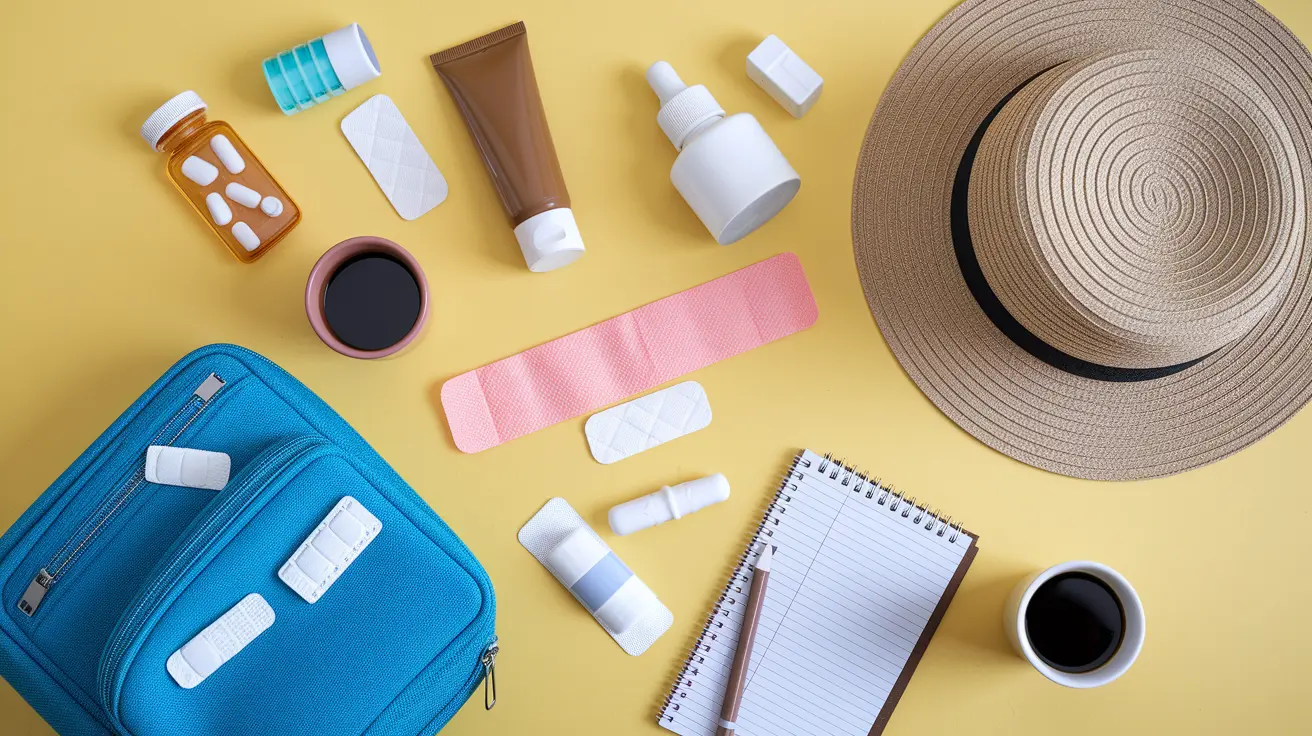
Every travel health kit needs a baseline, then adjustments based on your medical history, destination, trip length, planned activities, and how far you’ll be from reliable care. A week at a resort needs a lot less than three weeks trekking through altitude and malaria zones. Use the checklist below as your starting point, then scale quantities up or down from there.
Personal prescriptions and emergency medicines
- [ ] Full prescription supply plus 14 extra days (original labelled containers)
- [ ] Rescue inhaler, if prescribed
- [ ] EpiPen or epinephrine auto-injector, if prescribed (clinician-directed)
- [ ] Insulin or other biologics plus 14 extra days (clinician-directed)
- [ ] Standby antibiotics for traveler’s diarrhea (clinician-directed)
- [ ] Antimalarials for the full itinerary (clinician-directed)
OTC pain, fever, allergy, stomach, cold, and motion-sickness medicines
- [ ] Acetaminophen 500 mg, 20 tablets
- [ ] Ibuprofen 200-400 mg, 20 tablets
- [ ] Cetirizine 10 mg, 10 tablets
- [ ] Loperamide 2 mg, 12 tablets
- [ ] Oral rehydration salts, 10 packets
- [ ] Antacid tablets
- [ ] Motion sickness tablets or patch
Wound care and first aid supplies
- [ ] Assorted adhesive bandages, 20
- [ ] Sterile gauze pads, 10
- [ ] Antiseptic wipes, 20
- [ ] Antibiotic ointment
- [ ] Elastic bandage
- [ ] Digital thermometer, 1
- [ ] Tweezers and small scissors
Destination specific medicines and prevention products
- [ ] Acetazolamide for altitude (clinician-directed)
- [ ] Ondansetron for nausea (clinician-directed)
- [ ] DEET 20-30% repellent, 50 mL
- [ ] SPF 30+ sunscreen, 100 mL
- [ ] Permethrin spray for clothing
- [ ] Water purification tablets
Medication storage and transport equipment
- [ ] Insulated case or cooler for temperature sensitive meds
- [ ] Reusable cold packs
- [ ] Pill organizer
- [ ] Carry on bag reserved for all medications
Printed and digital medical records
- [ ] Prescription records and physician letter
- [ ] Vaccination certificates (including yellow fever card)
- [ ] Insurance details and policy number
- [ ] Emergency contact list
Items marked clinician-directed depend on a prescriber’s read of your health history, destination, and itinerary. They’re not universal additions, so skip packing them without that guidance.
The sections ahead get into dosing examples, legal and customs checks, vaccine timing windows, warning signs that mean you should stop self-treating, and adjusted quantities for trips shorter or longer than 14 days.
Prescription Medication Packing Rules for International Travel
(((alt-img2)))
The simplest rule for prescription medicine: pack your full trip supply plus a buffer. A common guideline is 1.5 to 2 times your trip duration, or at minimum 14 extra days beyond when you expect to return. For longer stays, consider adding a full extra month if your prescriber agrees it’s reasonable and your medicine’s shelf life allows it. For insulin, this often looks like your prescribed daily dose multiplied by the number of travel days, plus 14 extra days on top. A one-month diabetes kit built this way might also include around 50 additional test strips, since testing frequency tends to climb with travel stress, time zone shifts, and dietary changes.
The same buffer logic applies to chronic medicines, rescue inhalers, contraception, mental health prescriptions, injectable products, and anything you’d consider an emergency treatment. But the calculation isn’t just arithmetic. Refill timing matters, since some pharmacies won’t release an early refill without a specific travel note. Dose changes in the weeks before departure can throw off your math, so recalculate close to your trip date rather than months ahead. Think through what happens if a dose gets lost or damaged, and whether your destination has reliable access to an equivalent medicine if your supply runs short.
Adherence becomes its own challenge once you’re moving through time zones. A phone alarm set to your home schedule won’t always translate cleanly, especially for medicines tied to meals or sleep. A pill organizer, labeled by day or by destination date, can catch mistakes before they happen, particularly on multi stop itineraries. Rather than guessing how to compress or stretch dosing intervals yourself, ask your clinician or pharmacist for a written schedule that accounts for your specific time zone changes. It’s a small ask that prevents a real problem.
Your physician letter and prescription record should list generic names, strengths, doses, diagnoses, and prescriber contact details, not just brand names. Generic names are what a foreign pharmacist will recognize if you need a local equivalent. Brand names vary wildly by country, and a name that’s common at home may mean nothing abroad.
OTC Travel Medicines for Common Symptoms
(((alt-img3)))
A well built travel pharmacy covers the symptoms you’re most likely to run into without duplicating active ingredients across different products, which is an easy mistake to make when combination cold and flu remedies get involved.
Pain and Fever Medicines
Acetaminophen 500 mg (20-30 tablets) and ibuprofen 200-400 mg (20-30 tablets) cover most pain and fever needs for a two week trip. They work differently and carry different risk profiles, so the right one for you depends on your health history. If you have liver concerns, acetaminophen needs a closer look. If you have kidney issues, stomach ulcers, bleeding risk, or you’re pregnant, ibuprofen and other NSAIDs deserve a conversation with your prescriber first.
Final Words
Packing the kit now means matching the 14-day baseline to prescriptions, OTC needs, wound care, prevention gear, and medical records.
The post covered the at-a-glance checklist, prescription supply math, OTC choices, first-aid quantities, destination prevention, vaccine timing, storage and customs, diarrhoea care, and printable templates.
Adjust quantities by trip length and health history, mark clinician-directed items, and keep originals and records in carry-on.
Start with the downloadable 14-day template, personalise and back it up so your international travel medications and health kit packing list is clear, portable, and reassuring.
FAQ
Q: How much prescription medicine should I pack for international travel?
A: The amount of prescription medicine should be your full trip supply plus a 14-day buffer; for long stays consider adding an extra month and calculate insulin and test-strip needs accordingly.
Q: What does a 14-day travel health kit include?
A: A 14-day travel health kit includes full-trip prescriptions plus 14 extra days; acetaminophen 500 mg (20), ibuprofen 200–400 mg (20), cetirizine 10 mg (10), loperamide 2 mg (12), ORS 10 packets, bandages, gauze, wipes, thermometer, DEET 50 mL, SPF 100 mL.
Q: How should I carry medications through airport security?
A: Medications should be carried in original labelled containers in carry-on luggage with prescription records, physician letter, device documentation, and temperature-control gear for insulin or biologics; check airline and airport rules before travel.
Q: Which OTC medicines are essential for travel?
A: Essential OTC travel medicines include acetaminophen, ibuprofen, non-drowsy and sedating antihistamines, antacid, short-course omeprazole, meclizine for motion sickness, and clinician-prescribed ondansetron where appropriate; check contraindications and duplicate ingredients.
Q: What first-aid supplies should be in a travel kit?
A: A travel first-aid kit should include assorted adhesive bandages (20), sterile gauze pads (10), wound-closure strips, tape, antiseptic wipes, antibiotic ointment, hydrocortisone, antifungal cream, elastic bandage, gloves, thermometer, tweezers, scissors, and a CPR face shield.
Q: What destination-specific medicines and prevention gear should I pack?
A: Destination-specific items include malaria prophylaxis chosen with clinician input, acetazolamide for altitude when directed, DEET and permethrin-treated clothing, bed nets, SPF 30+ sunscreen, oral rehydration supplies, and any activity-specific emergency meds.
Q: When should I get travel vaccinations and how long before departure?
A: Travel vaccinations are best planned 6–8 weeks before departure; yellow fever requires vaccination at least 10 days before travel; rabies pre-exposure follows days 0, 7, and 21–28; confirm schedules with a travel clinic.
Q: How should I prepare medical records and backups for travel?
A: Medical records should list generic medicine names, doses, allergies, conditions, emergency contacts, and insurer details; keep a paper copy, encrypted cloud copy, and offline password-protected file named clearly (for example MedList_Name.pdf).
Q: When should I use loperamide or a standby antibiotic for traveller’s diarrhoea?
A: Loperamide should be used per package instructions (adult example: 4 mg then 2 mg after each loose stool, max 8 mg/day); standby antibiotics are for clinician-defined situations, considering regional resistance and stewardship.
Q: How should I handle temperature-sensitive medicines like insulin?
A: Temperature-sensitive medicines should travel in insulated cases with cold packs and thermometer strips, never frozen; arrange destination refrigeration and avoid checked luggage where temperatures are unreliable.
Q: Are controlled medications allowed abroad and what paperwork is needed?
A: Controlled medications may face restrictions abroad; check destination rules 4–6 weeks ahead, carry original prescriptions, a physician letter, and consider import permits, noting many countries limit personal supplies to a set number of days.